
WELCOME!
Hi! I'm Fran. I'm thrilled you're here.
After working as a film producer and freelance
journalist, for titles such as The Telegraph, Standard
and New Scientist, I am now working as an
illustrator focusing on editorial, live and
surface design commissions.
To view a categorised selection of my artwork, you can
visit the work section of this site - or just scroll down for
a speedy squiz. To see my AOI (Association of Illustrators)
You can license my cartoons through CartoonStock or reach out directly.
Get in touch and tell me all about your project, I can't wait to meet you and make it a beautiful reality!
_edited_edited_jp.jpg)
A small selection of the publications I've worked with:


Surface Design News: I'm excited to announce that my first two collections brochures for HOME and APPAREL are available. They each contain 15+ carefully-crafted, nature-inspired
collections for adult and children's markets.
If you are licensing surface design, a company buyer or you have another commercial reason for wishing to receive a copy of either, please email me and I'll send them straight out to you.
MY LATEST COLLECTION
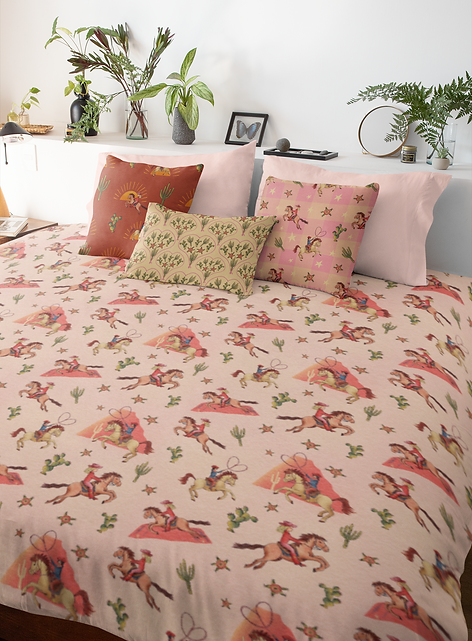
All the energy of the Wild West with a girl's tween vibe. Yee hah!


.jpg)

.jpg)
.jpg)
.jpg)
.jpg)

.png)
ARTWORK SELECTION
Here's a quick tour of some of my artwork, for the full picture check out the 'Work' section of this site and explore by category.

Note, this was a not an official commission, but a personal project based on a New Scientist brief as part of Inkygoodness' editorial course. Read the case study here.

Personal work for 'petit journal' ALBERT, a French newspaper for children aged 9-14.
For ALBERT, an illustrator creates a surreal-looking cover image inspired by its major stories, which are then cropped to accompany the articles inside.
I decided to try my hand at No. 147 in which the following subjects were covered:
Why the counterfeit goods market is growing.
What happens to radioactive waste.
How glaciers hold 'ice memories' of our planet.
Nelson Mandela's tenacious fight for equality.
Smaller stories not represented in the original cover - but minor articles often are included in the cover image - were Burkina Faso, Dominican Republic and Japan, so I included them also.

Created for The Imagined Book Cover challenge on Instagram, which was founded by Monty Lee - #theimaginedbookcover2025. In my version, Eleanora is a giraffe with allergies and, as a result, has a slight problem with loud, windy and snotty sneezes. Needless to say whenever she has a sneeze attack it affects all of her jungle friends. At first they get pretty angry with her, but in the end they grow to understand how they can help her manage her troublesome symptoms in the kindest, cutest ways.
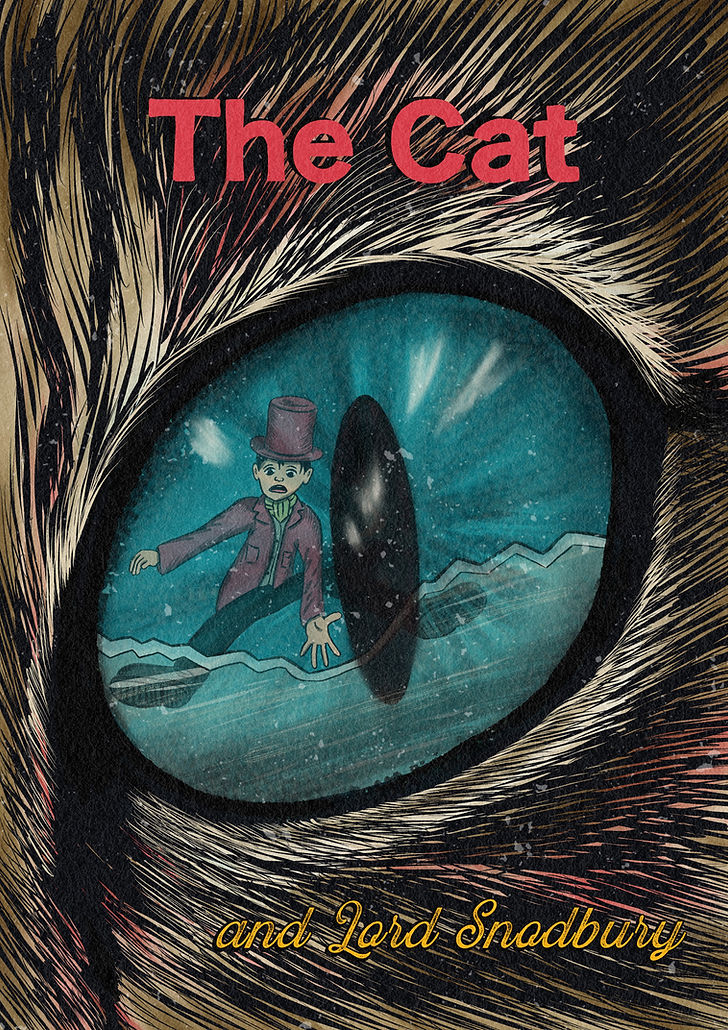
Created for The Imagined Book Cover challenge on Instagram, which was founded by Monty Lee - #theimaginedbookcover2025. Designed with a children's graphic novel in mind, this tells the story of a special relationship between a young cat and a Lord, who rescued him in what he thought were his last moments.

Daisy Sweetapple Lives Next Door was designed for The Imagined Book Cover challenge on Instagram, which was founded by Monty Lee - #theimaginedbookcover2025. The monkey is based on one of my childhood toys, Sam, whose hands were stitched together with cotton thread so that I could walk around with his arms around my neck. Is Daisy's monkey real or her own little Sam? I guess you'd have to read the story to find out exactly what goes on next door.

I drew this imagining what happens when you take your eyes off the three year old for a few seconds and she has some furry accomplices at play.

The Giant Pacific Octopus has three hearts and nine brains. This illustration shows how I would illustrate this fun fact for a children's magazine.

Personal work for Youpi Doc, a French magazine aimed at children who I would very much like to illustrate for in the future. I created this cover image, based on the magazine's theme of 'Pourquoi faut-il se laver?' (why do we have to wash ourselves) and created my own version. I copied their magazine title and cover elements to make it look realistic, but, as explained, this isn't the official cover, it's my design based on
their theme.

This illustrated map of the Aude region in France shows some of the most exciting, family-friendly destinations in the department.
Living in the same region, and in the department next door, the map highlights twelve locations I personally recommend for families planning a summer trip, combining travel illustration with practical insights for exploring the Aude. Perfect for parents seeking child-friendly travel ideas in France, the map brings each location to life through engaging, hand-drawn visuals.
_JPEG.jpeg)
I created five illustrations for Hans Christian Andersen’s The Ugly Duckling for part of this year's coursework for the part-time BA (Hons) Illustration I'm doing. The pieces showcase my style and approach to children’s book illustration, highlighting playful characters and expressive storytelling designed to captivate young readers.

This was created as part of the For Planet Ocean challenge on Instagram by @forplanetocean in response to the 'Stories from the Coast' prompt. I wanted to feature the green sea turtle because despite being gentle herbivores they are grossly hunted for medicine and body parts - and their eggs are hunted for food while their nesting sites diminish on beaches.

Inspired by the For Planet Ocean challenge on Instagram by @forplanetocean the prompt for this piece was 'Untold Story'. It shows the essential relationship between krill (tiny shrimp-like creatures) and baleen whales and how their poo actually fertilizes the ocean. Rich in nutrients, it feeds the phytoplankton that krill - and the rest of the ocean food web - rely on.
Whales don't just eat krill, they help create the conditions for krill to survive. Most of the animals, from penguins to seals in Antarctica, for example, depend on krill.
The ocean is used to support much higher krill and whale numbers, but today the monstrous industrial krill harvesting is devastating that fine balance. Studies from Stanford and Nature Communications show that current krill catch levels, which have quadrupled in the last 30 years, could threaten whale recovery just as their populations are starting to rebound after nearly being wiped out by whaling.
LET'S CONNECT
I'd love to discuss how we can work together, reach out to me by email at frances@francesmarcellin.com - thank you.

This is happens way too often in my studio!
